By Erica Reid on behalf of the Wichita Symphony
Principal Cellist Dr. Leonid Shukaev takes center stage on January 24 for Haydn’s Cello Concerto No. 1 in C Major as part of Voyage to Vienna. We recently spoke with Dr. Shukaev about his love for this musical masterpiece, how he approaches the role of soloist, and more. This interview has been edited for length and clarity.
Wichita Symphony: How did you choose the cello as your primary instrument?
Dr. Leonid Shukaev: We don't have any professional musicians in my family, but my grandfather played guitar with his friends. And of course my mother also loved music. (Actually I was surprised when I was at the university and found that she was a winner of master first rank in gymnastics, which I didn't know about her when she was young, but she loved music as well.)
She brought me to the music school — of course she would like that I would play piano. All positions already were occupied, so they said, “Please come next year.” We already were leaving, and then the cello teacher came and he said, “Oh, look at your hands, you probably could be a cellist.” And my mother said, no, no, no, no, we would like that he would be a pianist.
He said, no, you could just try for one year because in our system of education we always have piano as a second instrument. So in that case she said okay, maybe just for one year. And that's how I started.
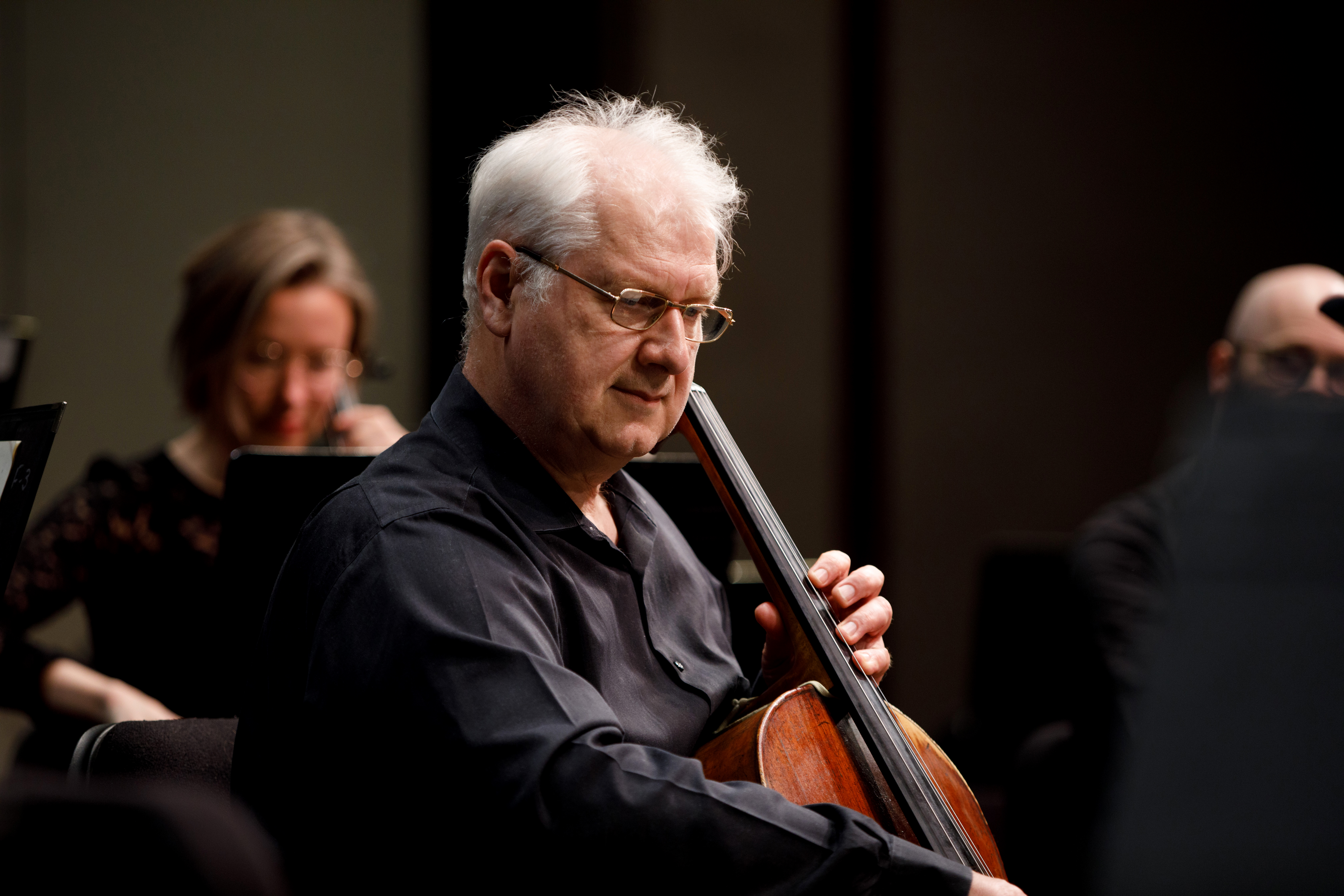
WS: On January 24, you will perform as soloist for Haydn’s Cello Concerto No. 1 in C Major. What is your relationship with this piece of music?
LS: I think for every cellist who has played this a few times with orchestra, it's the core of the cello concert repertoire.
The history of that piece is great because of how great players influence the composers. Haydn’s [cello concerto] was written for the cellist Joseph Franz Weigl, who was the principal, and he was very, very well-known, and together with another great cellist at that time, influenced development of cello technique because he used a thumb position that allowed [cellists] to play in high register a lot of fast passages. And that was not typical at all for a lot of compositions of that period. So he looked forward and developed a lot of the technical elements which were mostly typical of the solo violin performances, but not the cello at that time.
[Haydn’s first cello concerto] has a lot of very fast passages and that’s because, even for our modern days, it’s a challenging technique. The finale is still challenging! It’s very virtuosic writing, much ahead of his time. If he could find the perfect instrumentalist to whom he could write, then he could open the borders of that instrument, make them broad and wider. I think that’s what Haydn did.
WS: If an audience member has never heard this work by Haydn before, what guidance might you give them? What could they listen for, or look forward to?
LS: [Haydn’s first cello concerto] has a soulful second movement with lots of intimacy and contrast, with drama in the minor key in the middle, and that brilliant finale. I think that gives any cellist the opportunity to demonstrate so many characters in music.
For example, in the second movement there are strings playing only with cello, no wind instruments — so he creates even more tight connection between instruments, more intimacy in atmosphere and conversation.
WS: What can you tell us about how you’ll approach your role as soloist at the Jan 24 performance?
LS: I’m trying of course to perform my best, but also to create the correct language of the piece. For each piece of music, if you find the language, then you open that music to the heart of the listeners.
Sometimes you have people that play everything correctly, and it sounds like music from on high from two centuries ago. But sometimes they play and you feel it was written today or yesterday. That’s my idea — of course you find the style, but you need to find the language that could communicate and establish that music with listeners. This is what I will try to do.
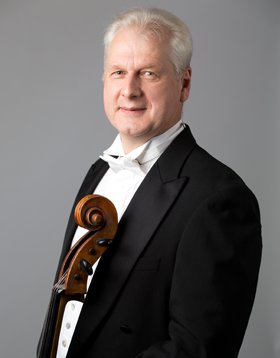 About Leonid Shukaev
WSO principal cellist Leonid Shukaev belongs to a great Russian cello tradition. As a student at St. Petersburg Conservatory, he was fortunate enough to study with Emanuel Fishmann, the teacher of Misha Maisky, Boris Pergamenshikov and many other great cellists who are now playing in leading Russian and European orchestras. Mr. Shukaev had a rich and successful teaching experience at St. Petersburg Conservatory and the Rimsky-Korsakov Music College, where he held the position of professor of cello and string quartet. He was also on the faculty at Oberlin Conservatory for five years.
|
Please upgrade

Internet Explorer
|
or try one of these other browsers.
Browsers are free and easy to install.
|
||||
| Upgrade Internet Explorer | What's a browser? Opt out |