Wichita Symphony
By Don Reinhold
This is the first performance by the Wichita Symphony of music by Polina Nazaykinskaya.
Since emigrating from Russia in 2008 to attend graduate school in America, Ms. Nazaykinskaya's career as a composer has flourished.
Her website lists a catalog that includes orchestral works, concertos, ballets, pieces for solo instruments, chamber ensembles, and works for voice, including operas.
According to the composer, Fractures alludes to the theme of “fate.”
With a work the composer describes as related to “fate,” we begin the 2026-2027 Wichita Symphony season appropriately by pairing it with Beethoven’s Fifth Symphony, widely regarded as the classic example of “fate” in music.
Polina Nazaykinskaya will be a new name to most of the audience. Born in the industrial city of Togliatti on the banks of the Volga River in the Samara region southeast of Moscow, she displayed precocious musical talent early on and initially trained as a violinist. Her interest in composition emerged during her studies at the Tchaikovsky Conservatory in Moscow, where she graduated with a double major in violin and composition.
Faced with limited opportunities as a female composer in her native country, Nazaykinskaya immigrated to the United States and enrolled in the master’s program at Yale University, where she studied composition with Christopher Theofanidis and Ezra Laderman. She recently completed a doctorate at City University of New York (CUNY) under Tania León.
As a recipient of a fellowship for her doctorate from the Paul and Daisy Soros Fellowships for New Americans, Nazaykinskaya responded to an interview question on the Soros website by stating that she believed in the power of music as a vehicle for social change. She writes:
In a climate of division and polarization, music can unite us, while reinforcing the importance of listening and respecting one another. I strongly believe that music has the capacity to bring social transformation, as much as it can change the audience members by bringing a greater awareness of the self in relation to the person’s social milieu. In that sense, music can also be an effective means to call attention to issues such as social justice, discrimination, poverty, and violence.
Many of her chamber works address “the tragedy of humanity’s collective history, in particular, the Holocaust.” She frequently collaborates with choreographers to create new dance works. The Atlanta, Minnesota, and Utah symphonies, among others, have performed her orchestral works. This past June, Daniel Hege conducted her 2019 work, Fenix, at the National Orchestral Institute.
Nazaykinskaya provides the following notes on Fractures on her website, polinacomposer.com.
“Fractures" was composed in late 2024, in a period of deep unrest and sorrow. Writing it became a way to process the pain I was witnessing and feeling—an attempt to give form to emotions that words could not hold.
My musical voice is shaped by two worlds: the Russian conservatory tradition of my early years, and the life I built after immigrating to the United States. In Fractures, these roots intertwine with more contemporary influences, from the clarity and pulse of American minimalism to the sweeping orchestral colors I absorbed from my mentor, Christopher Theofanidis.
The work opens with a theme I think of as “fate”—marked con dolore, steeped in grief. From there, the music moves through surges of urgency, passages of struggle, and flashes of fragile hope. The ending rises toward something powerful, yet resists resolution; it leaves a question hanging in the air.
For me, Fractures became both a mirror and a compass during a complicated time. I hope it might speak to listeners in their own moments of searching. This piece is dedicated to Maestro Lawrence Loh, who has championed my music with generosity and belief since 2014.
Lawrence Loh conducted the premiere of Fractures with the Syracuse Orchestra on January 25, 2025. The work is scored for double winds, two horns, timpani, and strings.
The performance by Loh and the Syracuse Orchestra is available on YouTube.
Polina Nazaykinskaya "Fractures" for symphony orchestra (2024)
The Wichita Symphony previously performed Brahms’ Double Concerto three times, most recently on December 18 and 19, 1989. Andrzej Grabiec (violin) and David Carter (cello) were the soloists, with Michael Palmer conducting. In October 1963, two of the era’s leading artists, violinist Joseph Fuchs and cellist Zara Nelsova, performed the concerto under the baton of James Robertson.
Brahms composed his Concerto for Violin and Cello, known as the Double Concerto, in 1887 during his summer “workation” in Thun, Switzerland, a place of such inspiring beauty that Brahms wrote that melodies were so abundant he’d step on them if he wasn’t careful.
The motivation for composing the Concerto was to serve as a peace offering to his longtime friend and colleague, violinist Joseph Joachim, with whom he had become estranged over Joachim’s divorce. Brahms sided with Joachim’s wife in the court proceedings, which infuriated Joachim.
This would be Brahms’ final orchestral composition.
* * * *
As Brahms looked around him in 1887, the world was changing. The days of his fiery young Romanticism were long past. He had championed conservatism, the savior of absolute music in the face of Lisztian and Wagnerian modernism. Now his archrivals were gone, Wagner in 1883 and then Liszt in 1886. Although Brahms had defended the values and traditions of Viennese classicism, it had become clear that, despite battles won, the war would be lost. Even in death, Wagner continued to dominate and influence composers across Europe, and if at times it seemed that the musical world revolved around Bayreuth, it wasn’t too far from the truth. Now, as an elder statesman of music, Brahms enjoyed the respect and esteem of an adoring public, especially in his adopted city of Vienna, even as he began to question his own relevance in the musical world.
Since satisfying his followers with the long-delayed First Symphony in 1876, Brahms had spent the next decade producing a series of masterpieces in close succession. Three more symphonies followed, each more acclaimed, if not quite equal to his first. He also composed a second piano concerto and a violin concerto, along with several major chamber works. If the music had lost some of the passion of youth, it now had the burnish of mastery and maturity, along with a certain valedictorian tone.
As Brahms headed off for his summer holiday in Thun, Switzerland, he was troubled by an absence in his life. He had not spoken to his longtime friend and confidant, the violinist Joseph Joachim, in three years. With several friends passing in recent years, he felt a strong need to repair their broken friendship before it was too late. Brahms owed much to Joachim. Although only two years older than Brahms, Joachim, a child prodigy as a violinist and a leading musical figure by his late teens, had provided encouragement, support, and connections when they first met in 1853. It was Joachim who arranged the important introduction to Robert and Clara Schumann. The two men had toured together as concert artists. Joachim performed the premieres of many of Brahms’s chamber works and was the dedicatee of the 1878 Violin Concerto.
In 1884, Joachim was embroiled in divorce proceedings against his wife, Amalie Weiss, whom he accused of an affair with the music publisher Fritz Simrock. In court, Brahms defended Amalie. Enraged by the betrayal, Joachim broke off his friendship with Brahms. In the summer of 1887, Brahms decided to mend fences with a new work, a concerto for violin and cello that would reunite Joachim with Brahms and the cellist Robert Hausmann, with whom they had enjoyed many chamber music performances.
The choice of a double concerto was unusual. Few successful 19th-century models existed to follow. The concerto, which had evolved in the 19th century as a heroic contest between soloist and orchestra, didn’t easily accommodate the notion of two equal soloist heroes. Beethoven’s Concerto for Violin, Cello, and Piano, the so-called “Triple Concerto,” was one of the few early-19th-century exceptions for multiple instruments. In choosing a double concerto, Brahms had to look back to the earlier concerto grosso of the Baroque period and to the symphony concertantes of Mozart and Haydn for previous examples of concertos written for multiple instruments.
Brahms seemed bemused by his unusual choice. In his typical self-deprecating fashion, he wrote to his friends Elizabeth von Herzogenberg and Clara Schumann that he was working on an “amusing idea” for a concerto for violin and cello, calling it “his latest piece of folly.” Brahms must have been in good spirits, and in Thun he worked in an inspiring setting, with views of the Alps and the Bernese Oberland glaciers from his room. This setting may have given this and several late chamber works composed in Thun what Karl Geiringer called an “Alpine majesty.” For Brahms, the views inspired so many melodies that he said he had to be careful not to step on them!
At the end of September, on his way home to Vienna, Brahms stopped in Baden-Baden, where he sat down with Joachim and Hausmann to play through the new work. Joachim must have been struck by the gesture of friendship in the new piece. He would have noticed Brahms’s reminiscence of Viotti’s A Minor Violin Concerto, a work both men had enjoyed in their younger days, tucked into the first movement. In the finale, there were veiled references to Joachim’s F-A-E motto (“Frei aber einsam” or “free but lonely”). Clara Schumann, who was present at the rehearsals, wrote in her diary, “This concerto is a work of reconciliation – Joachim and Brahms have spoken to each other again for the first time in years.” Brahms must have felt relief, for he confided to a friend, “Now I know what’s been missing in my life for the past few years… it was the sound of Joachim’s violin.”
The concerto premiered on October 18, 1887, with Joachim and Hausmann as soloists and Brahms conducting the Gürzenich Orchestra of Cologne. That season, the three performed the work at several venues in Germany and Austria.
The work was well received by the public, perhaps more out of deference to Brahms. His own circle of friends seemed indifferent to the piece, though none would admit it to his face. Even Clara expressed reservations in her diary: “I do not believe the concerto has any future…nowhere has it the warmth and freshness which are so often found in his works.” Publicly, the review by the influential music critic Eduard Hanslick (1825-1904) in the Vienna press may have hurt Brahms the most. Normally a strong advocate for Brahms’ music, Hanslick wrote, “I am unable to place the Double Concerto among the first rank of Brahms’s creations. We feel that it is characterized by a lack of freshness and originality of feeling, of melodic and rhythmic magic.” Perhaps it was another indication to Brahms that the world was passing him by. The Double Concerto would be his last work for orchestra. As often happens with great music, audience and critical views mellow with age.
Even today, among Brahms’s four concertos, this is the least heard. The problem may lie more in finding two soloists of equal artistry who can work together. Walter Niemann, in his 1945 biography of Brahms, wrote that the concerto required two soloists “so thoroughly accustomed to playing together as can hardly happen, except with members of the same family.” His comment anticipates the twin-sister duo of Emily and Julia Bruskin, our soloists for this performance. We can be assured that we will hear a performance Brahms and Niemann would have approved.
As Brahms does in his Second Piano Concerto, he places the first-movement cadenzas at the beginning. Four bars of orchestral introduction, just enough to present the thematic motives of the first theme and the rhythmic tension between duple and triple subdivisions, suddenly stop in mid-thought before the tonic key is firmly established. The solo cellist enters with the first cadenza. A second orchestral fragment alludes to the movement’s second theme, which is clearly derived from the first. Again, the thought is cut off unresolved with the entrance of the violin solo, shortly joined by the cello in a duo cadenza. The sweeping arpeggios, which dovetail and cross the range of both instruments, will be a feature of the movement and a difficult ensemble issue for the soloists.
Fifty-seven measures into the piece, the orchestra erupts with the first theme, firmly establishing A minor as the tonic key. When the two soloists re-enter with the main theme, Brahms is already beginning to vary his subject matter. Rarely in late Brahms does one find exact repetition. This type of continuous variation was a trait that particularly piqued Arnold Schoenberg’s interest and helped lead to some of the compositional theories of the early-20th century. It is also interesting to note that the concept of continuous variation found two different approaches in the music of Brahms and Wagner. For Wagner, it shaped the free-flowing fantasy development of his music. In Brahms’s music, variation techniques were always clothed in the forms of the classical tradition.
The movement features devilishly difficult writing for both soloists and the orchestra. The development section explores the rhythmic tension between triplets and duplets. There’s extensive writing for the soloists, who play together, separated by an octave. This adds richness to the line and a sense of romantic melodrama, but it also poses challenges in coordination and tuning.
The second movement opens with horn calls that echo the pastoral element often found in Brahms’s music. The first theme again features the two soloists, who play the same line an octave apart. A second theme introduces a chorale in the woodwinds, which the soloists then embellish.
The finale, once again, draws on Brahms’s love of Hungarian gypsy music. It’s a good-humored movement with plenty of color. It tends to stop and start, joining dissimilar blocks of texture. Brahms’s friends may have seen this lack of continuous through-composed music as a sign of Brahms’s declining abilities. But even something less than top drawer by Brahms is better than most. It would be worth the listener’s effort to let attention stray occasionally from the soloists to admire the fine woodwind writing in this movement.
In addition to the solo violin and cello, the concerto is scored for an orchestra consisting of winds in pairs, four horns, two trumpets, timpani, and strings. The work lasts approximately 32 minutes. The first movement, the main center of gravity in the work, takes up about half that time.
Before or after attending the Wichita Symphony concert, listen to this performance of Brahms's Double Concerto with violinist Anne-Sophie Mutter, cellist Maximilian Hornung, and the Bavarian Radio Symphony, conducted by Mariss Jansons.
Brahms : Double Concerto/Anne-Sophie Mutter, Maximilian Hornung
The Wichita Symphony has performed the 5th Symphony in eleven previous concerts. Most recently, movements three and four were heard last November as part of Thomas Heuser’s “What Music Is” program. The prior performance of the complete work was on October 28 and 29, 2017, with Daniel Hege conducting. Some will recall the performance on April 12, 2012, when Century II management interrupted the second movement onstage to announce a tornado warning and ask all balcony listeners to move to the main floor for safety. After a pause of several minutes, Maestro Hege restarted the second movement and finished the concert without further interruption. Afterward, everyone relaxed quietly until the “all clear” was given. The tornado bypassed downtown Wichita. Beethoven’s tempestuous symphony seemed appropriate for the occasion.
Completed in 1808, the Fifth Symphony falls within what scholars call Beethoven’s middle, or “heroic,” period.
A short musical idea, known as a “motive,” recurs throughout the work, unifying it as a whole. In listeners’ ears, this motive becomes synonymous with the concepts of fate and victory.
By introducing a piccolo, contrabassoon, and trombones for the first time in a symphony in the fourth movement, Beethoven expands the orchestral palette and heightens the music's dramatic impact.
They are probably the most famous four notes in all of classical music – three repeated eighth-note Gs, falling by a third to an E-flat, held on the downbeat and extended by a fermata. The opening is played in unison by the entire string section, with clarinets doubling. Most people, even if they aren’t regular concertgoers, recognize the rhythm: ta-ta-ta-DA. The pattern is immediately repeated down one step, this time with three short F’s falling to an even longer-held D. So begins Beethoven’s Fifth Symphony.
It is one of the most concise, elemental beginnings in music. The two opening rhythmic jabs are like a thrust and a parry, the musical equivalent of Shakespeare’s great question, “To be, or not to be?” Beethoven poses an open-ended question. Harmonically ambiguous, he hasn’t yet provided enough information in this opening to clearly establish whether he’s in C minor or E-flat Major. Once the question is posed, the entire symphony becomes a quest for resolution, reached only through immense struggle.
Ever since its premiere in Vienna on December 22, 1808, listeners have interpreted the Fifth Symphony as a great struggle against forces that must be overcome, culminating in triumph. Beethoven left no programmatic description of the work, but his comment to his friends and early biographer, Anton Schindler, that the opening notes represented “Fate knocking at the door” has led listeners to understand the work on a deeply personal level. The opening four-note motive has become known as the “fate motif.”
Beethoven’s contemporaries may have heard the Fifth Symphony as a call for German patriotism and unity in the wake of defeats by Napoleon’s French troops. The Treaty of Tilsit in July 1807 ceded all German lands between the Rhine and the Elbe to France. These were dark times across German-speaking lands. The writer E.T.A. Hoffman offered a different view, calling the Fifth Symphony the standard-bearer of Romanticism. In 1810, Hoffman wrote, “Beethoven’s music evokes terror, fright, horror, and pain, and awakens the endless longing that is the essence of romanticism… the Fifth Symphony unfolds Beethoven’s romanticism more than any of his other works and tears the listener irresistibly away into the wonderful spiritual realm of the infinite.”
Beethoven biographers have interpreted the Fifth as an expression of Beethoven’s struggle with deafness and even his contemplation of suicide. Maynard Solomon links the Fifth to the culmination of Beethoven’s “heroic” style, describing it as a conflict with mortality that is “superseded by renewed and transfigured life.” Paul Henry Lang, one of the leading musicologists of the 20th century, regarded the Fifth as “the consummate example of symphonic logic.” Clearly, Beethoven’s Fifth means many things to many people.
Beethoven’s choice of C minor for the Fifth Symphony suggests an association with heroic themes. E-flat Major, the key of the Eroica (“Heroic”) Symphony, carried connotations of heroism for Beethoven. He often used its relative minor, C minor, for similar or darker reflections on heroic ideals. (E-flat Major and C minor are related keys because they share a common key signature of three flats.) The funeral march of the Eroica Symphony, the Piano Sonata, Op. 13 (Pathetique), the Coriolan Overture, the Piano Variations in C minor, and even the late Piano Sonata, Op. 111, all works in the harmonic realm of C minor, evoke a heroic struggle. In the Eroica’s funeral march or the Coriolan Overture, Beethoven goes so far as to depict the hero’s death.
Whether the Fifth Symphony can be attributed to Beethoven’s actual life experiences or to an abstraction in the highest form of art is difficult to determine. Listening to the symphony, one might easily conclude that it reflects a tumultuous period in Beethoven’s life. Beethoven’s increasing deafness is well known. On the other hand, Beethoven was enjoying one of the peaks of his career and was at the height of his compositional powers during what is sometimes referred to as “his second maturity.” Within a brief span of about five years, beginning with the Eroica Symphony, Beethoven composed one masterpiece after another.
Beethoven typically composed music with long gestation periods. The earliest sketches for the Fifth Symphony date from 1804, alongside some sketches for the Third Symphony, and were worked on until sometime in 1806. During this year, Beethoven appears to have set the symphony aside and concentrated on the Fourth Piano Concerto, the Fourth Symphony, and the Violin Concerto, all of which seem to have little in common with the tempestuous Fifth. The presence of sketches for the Fifth Symphony on the same page as notes for the serene Violin Concerto suggests that Beethoven could work on opposing subject matter, possibly distancing himself from his own problems and rising to a more universal level of significance.
Most of the main work on the Fifth Symphony was done in 1807, and the work was completed by the spring of 1808. Again, Beethoven demonstrated his ability to work on other works simultaneously by sketching the Sixth Symphony, the “Pastoral,” and completing it later in 1808. The two works couldn’t be more dissimilar in character, yet they share many characteristics, such as the use of repetitive motives to create forward motion. But in contrast to the Fifth’s tightly wound intensity, the Pastoral Symphony unfolds at a leisurely pace.
Interestingly, the Fifth and Sixth Symphonies premiered at the same concert. On December 22, 1808, at the Theater an der Wien, Beethoven staged an Akademie featuring his music for his own benefit. By today’s standards, the program was immense, including the two symphonies, the Choral Fantasy, the Fourth Piano Concerto, several movements of the Mass in C, the concert aria “Ah! Perfido,” and some piano improvisations by Beethoven. The latter were significant because they marked Beethoven’s last public appearance as a pianist. What audience members may have remembered most was the building’s heating system failing. Three days later, Beethoven’s friend Johann Reichardt wrote, “There we sat from 6:30 till 10:30 in the most bitter cold and found by experience that one might have too much even of a good thing.”
* * * *
Viewing the first movement as springing from the opening “ta-ta-ta-DA” is both accurate and simplistic. Too short to be considered a melody, the four-note pattern is a motive, instantly recognizable to any listener by its memorable rhythm. If symphonies were biological creatures, it would be called a cell. During World War II, the Allies equated Beethoven’s rhythm with the Morse code signal for the letter “V,” so the motive became synonymous with “victory.”
In one form or another, the motive is heard almost constantly throughout the first movement. Thanks to its clarity, the first movement is easy to follow. What is interesting about the movement is not that Beethoven simply strings together motivic repetitions, but that he builds phrases, or musical sentences, that constantly push forward, becoming combative as they seek a point of resolution, which will be denied until the symphony’s finale. Donald Tovey wrote, “The first movement is remarkable for the length of its sentences rather than the brevity of its initial figures.” The recurrence of the motive in later movements helps unify the symphony in listeners’ ears and conveys the unfolding emotional content.
Once Beethoven poses his “to be or not to be” question through the opening motivic repetition, his initial response is to build a phrase from this motive that clarifies the C minor tonality and quickly leads to a cadence on the dominant of G major. He then introduces his first “but,” or surprise, not by returning to C minor, but by repeating the opening motive in fortissimo unison by both strings and winds in F minor, the subdominant relationship to the tonic C minor. A longer climbing phrase is built from the motive over a tonic C pedal tone, reaching a first real climax in a cascading C minor arpeggio that hammers out the main motive, now compressed into the falling pattern of driving eighth notes. By altering the C minor chord to make it a diminished seventh, Beethoven creates volatility that allows him to reach a new cadence signaling the second theme in E-flat major, a key briefly alluded to in the opening. To the layman, this may seem overly technical, but the point is to emphasize the volatility that occurs in such a brief span and how it’s achieved harmonically beneath the more obvious tension created by the motivic repetition.
The horns now introduce the second theme in E-flat Major, the relative major of C minor. The “ta-ta-ta-DA” rhythm of the main motive is immediately apparent in the theme’s opening and in the double-bass accompaniment. The theme itself extends the opening motive. Instead of falling thirds, Beethoven uses falling fifths, which are simply an intervallic augmentation of the opening motive. A second transition passage, built on repeated motives in the bass, reaches another climax like the first, but now emphasizes E-flat Major and brings the symphony’s exposition to a close. Most conductors will take the indicated repeat of the exposition, which in this case is almost essential to keep the movement balanced.
Beethoven launches into his development section with two statements of the opening motive in overlapping succession. Harmonically, the music touches on F minor, and the motive begins to be tossed about the orchestra in a kind of “motivic play.” Melodically, Beethoven alters the main motive’s identity, even giving it an upward lift, but the rhythmic characteristics are retained. From a soft dynamic level (piano), Beethoven builds his tension until he reaches fortissimo (very loud).
From this point, one of the most remarkable disintegrations of thematic material in music begins. The violins develop the second theme, the basses play a descending chord pattern drawn from the opening theme, and the winds move in contrary motion to the basses, stacking a chord change of their own in a truncated “short-short-long” variant of the main motive. We find ourselves in a turbulent storm of action. Beethoven extracts the three long tones of the second theme, reducing them first to two tones and finally to one, which is bounced back and forth between the strings and winds. The harmony is unstable. Although a fortissimo interruption by the second theme attempts to get things back on track, Beethoven keeps matters ambiguous until the opening motivic rhythm grabs hold with persistence, bringing us back to a full-orchestra fortissimo restatement of the opening, marking our arrival at the recapitulation.
The recapitulation will not be a literal repeat, and the emotional matters remain unresolved. Over the restatement of the opening phrase, a lone oboe voice emerges and, at the cadence, holds on for its own brief decorative cadenza. This would have been shocking in Beethoven’s time, and even today it comes as a surprising cessation of forward momentum.
Beethoven has one more surprise awaiting us, and it’s one of his longest and most tension-filled codas. It’s long enough to be considered a second development, and the underlying drama remains unresolved, reaching a new peak of intensity. Trumpets and timpani, which Beethoven used sparingly up to this point, now enter the fray in full force. More tension builds until the opening bars of the movement return, appearing to be a second recapitulation. Instead, Beethoven finishes with a cadential progression to bring the tempestuous movement to a close.
The second movement is a theme and variations in A-flat Major. Taking a cue from Haydn, it is a “double variation” in which two contrasting ideas alternate, each receiving successive variations. The first idea is a lyrical melody stated by the violas and cellos. The brass, timpani, and oboe introduce the second idea, which has a fanfare-like quality. Many scholars point to the military-band texture of this theme as evidence of the French revolutionary style’s influence on Beethoven’s music during this decade. Listen carefully. Not counting the upbeat, the theme is a subtle replay of the “ta-ta-ta-DA” rhythm, now elongated by the slower tempo.
Each successive variation of the lyrical theme gains momentum as the note values shorten and the string writing grows more demanding. (These passages, incidentally, are used by many orchestras today for string auditions and are an extreme test of legato playing and evenness of tone.) Similarly, the fanfare theme gains texture until it’s heard in the full orchestra. A coda brings elements of both themes together in a concluding variation.
The third movement is a scherzo. It’s not quite a “joke” as the word implies, but it has a lighter, almost dance-like feel. It is built from two main ideas, one of which is clearly linked to the symphony’s main motive. The opening idea is a climbing arpeggio, and its first appearance establishes that we’re back in C minor. The dynamic level is pianissimo (very soft), and the music has an almost spooky, unsettled feeling. This theme is interrupted by the horns, which announce the original “ta-ta-ta-DA” motive very loudly, now purely as a rhythmic repetition on the same pitch. The first part of the scherzo develops these two themes.
The basses announce a jocular theme for the trio, which is taken up contrapuntally as the theme rises through the string section, ending in a cadential pattern that again uses the “ta-ta-ta-DA” rhythm as punctuation, now in a rising four-note scale motive. Eventually, the full orchestra joins in. As the trio fades with a solo flute melody, Beethoven drops us back down to the lower range from which the scherzo sprang.
Returning to the opening scherzo section, Beethoven once again delivers the “shock of the new” to his contemporary listeners, who would have expected a more literal repeat of the scherzo. Now, the dynamics never rise above soft. The main repeated-note motive is almost a whisper, receding further into the background. The string arpeggio grows hesitant as Beethoven inserts a rest into the rhythm, using silence to create anticipation. The strings also alternate between bowing (arco) and plucking (pizzicato), the latter creating an even softer, tiptoe effect. Then, in one of the most remarkable transitions in music, and for its time a revolutionary effect, Beethoven drops the dynamics even further to a triple piano (ppp) in the strings, over which the timpani softly beats the main four-note motive, shifts to a two-note pattern, and then becomes a steady quarter-note drone. Without wasting time, Beethoven transitions through a mighty crescendo directly into his Finale.
What was heard as bare intervals of the third and fifth in the first movement are now combined into the basic structure of a C major triad as Beethoven triumphantly and radiantly states the opening theme of the fourth movement. Now, there is yet another surprise. We heard how Beethoven reserved the trumpets and timpani, for the most part, until the climactic moments of the first movement’s coda. In the fourth movement, he expands his instrumental palette – introducing the piccolo, the contrabassoon, and three trombones (alto, tenor, and bass), the first time these instruments appear together in a symphony.
These new instruments have multiple effects. They increase the full orchestra's dynamic range and introduce new tone colors. By adding the highest and lowest members of the woodwind family, Beethoven widens the range of his wind section and expands the orchestral texture. The trombones add burnish to the lower registers of the orchestra, while the piccolo adds brightness to the top. In contrast to the darker timbre (color) and tighter textures of the previous movements, the orchestral effect of this last movement is brilliant. The possibilities of symphonic orchestration would never be the same.
The movement is in sonata-allegro form. The “ta-ta-ta-DA” motive remains present, most clearly in the second main theme. With the three short notes now treated as a rhythmic triplet, the motive gains much more ebullience. At the height of the development section, Beethoven abruptly brings back the scherzo movement’s theme, most clearly identifiable with the symphony’s main motive. This was an innovative stroke of genius. Writers point to similar cyclic treatment in Haydn’s Symphony No. 46, where the third-movement minuet is briefly brought back in the finale. It’s hard to believe that Beethoven would have known this symphony, composed some thirty years earlier, nor did Haydn’s “innovation” spawn imitators. From a dramatic perspective, what Beethoven achieved was far more significant. The temporary cessation of excitement and the delay of the anticipated recapitulation heightened the drama. One final time, Beethoven ties all his movements together with the shared motive before leading us back through the transition to the fourth movement’s recapitulation.
There’s one more thing Beethoven must do before he feels he’s achieved the balanced proportions he wants. He writes a magnificent coda, even longer than the first movement’s. This coda is not about further development but about resolution. With an acceleration of tempo, Beethoven hits us with C major again and again. To drive his point home, he concludes his symphony with 55 measures of glorious C major, defined by only a few G major dominant chords. As Charles Rosen writes, these final measures “of pure C major are needed to ground the extreme tension of the work.”
Leonard Bernstein noted that listening to Beethoven’s Fifth gives the impression that every note is inevitable. There is no alternative to the precise choices Beethoven made. Like the greatest works of art, Beethoven’s Fifth Symphony stands on its own pedestal. By grappling with tragedy in a heroic context, Beethoven changed the course of music, making 19th-century art music more than mere pleasure and entertainment. Beethoven cast a long shadow over his successors, and it would be many decades before another composer – Brahms – could match Beethoven’s symphonic achievement.
The Fifth Symphony continues to win new believers to classical music. We encounter the Fifth as its relevance is renewed with each hearing. It illuminates life, perhaps even more so as we return to it over the course of our lives. By making Beethoven’s heroic struggle our own, the Fifth Symphony teaches us that we, too, might overcome life’s impediments and aspire to a transfigured state.
Whether this concert is your first encounter with Beethoven’s Fifth or your umpteenth, listening to it rarely fails to disappoint or reveal something new. Here are a couple of YouTube videos to check out: an older one with Leonard Bernstein conducting the Bavarian Radio Symphony Orchestra (the camera’s focus on a bearded Bernstein is worth it), and another with Christian Thielemann leading the Vienna Philharmonic.
Leonard Bernstein Beethoven Symphony No 5
Beethoven: Symphony No. 5 Fate Symphony | Christian Thielemann & Vienna Philharmonic
Lastly, what would Beethoven’s Fifth be in popular culture without the famous sports-commentary version by the late Peter Schickele (1935 – 2024), the creator of P.D.Q. Bach?
Featured Artists
Select an artist to read the full biography.
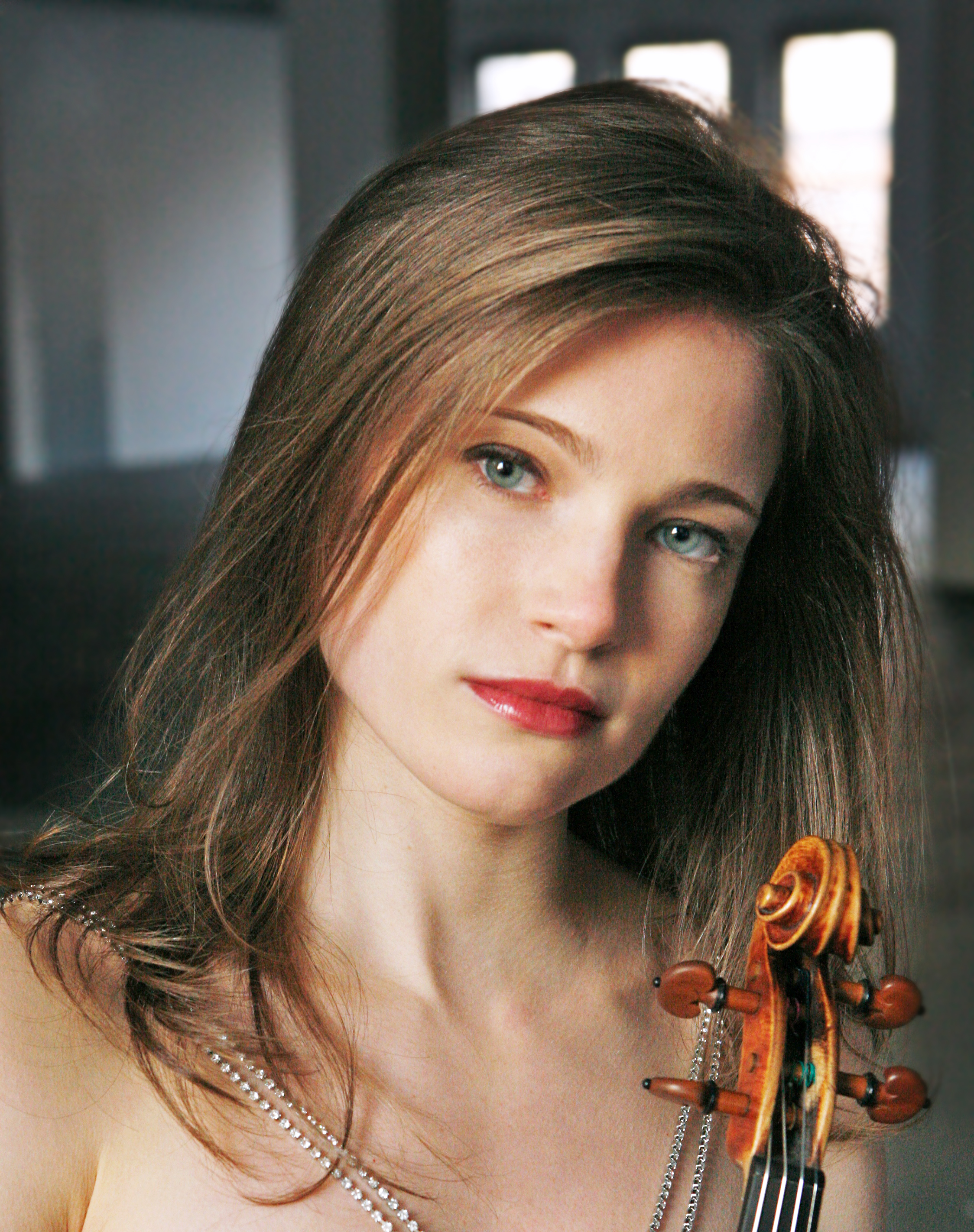 Emily Bruskin
Violin
Emily Bruskin has performed as a soloist with the Virginia, Pacific, San Francisco Ballet, Utah, Nashville, and Wichita symphonies and has given recitals across the country and around the world at venues including Carnegie Hall, the John F. Kennedy Center for the Performing Arts, the American Academy in Rome, and Boston's Jordan Hall.
As violinist of the Claremont Trio, she has made critically acclaimed recordings on the Arabesque, Bridge, BMOP/Sound, American Modern, Tria, and Ongaku labels and has commissioned piano trios from Kati Agócs, Nico Muhly, Mason Bates, Gabriela Lena Frank, Sean Shepherd, Helen Grime, Judd Greenstein, and Hillary Zipper.
Ms. Bruskin has appeared at the Chamber Music Northwest, Ravinia Festival, Saratoga Performing Arts Center, Mostly Mozart Festival, Caramoor Summer Music Festival, La Jolla Music Society SummerFest, Bard Music Festival, the Norfolk and Rockport festivals, and has given masterclasses at Columbia University, the New England Conservatory, the Eastman School of Music, and Duke University.
Ms. Bruskin has served as Guest Concertmaster of the American Ballet Theatre Orchestra. She can also be heard performing with the Orpheus Chamber Orchestra and the Metropolitan Opera Orchestra.
Ms. Bruskin was a Grand Prize winner of the Young Concert Artists International Auditions and the Kalichstein-Laredo-Robinson International Trio Award and received BBC Music Magazine's Critics' Choice Award and the Classical Recording Foundation Young Artist Award. Her teachers have included Donald Weilerstein, Ron Copes, Naoko Tanaka, James Buswell, and Susan Reed. A graduate of the Columbia-Juilliard Program, she holds degrees in neuroscience and music.
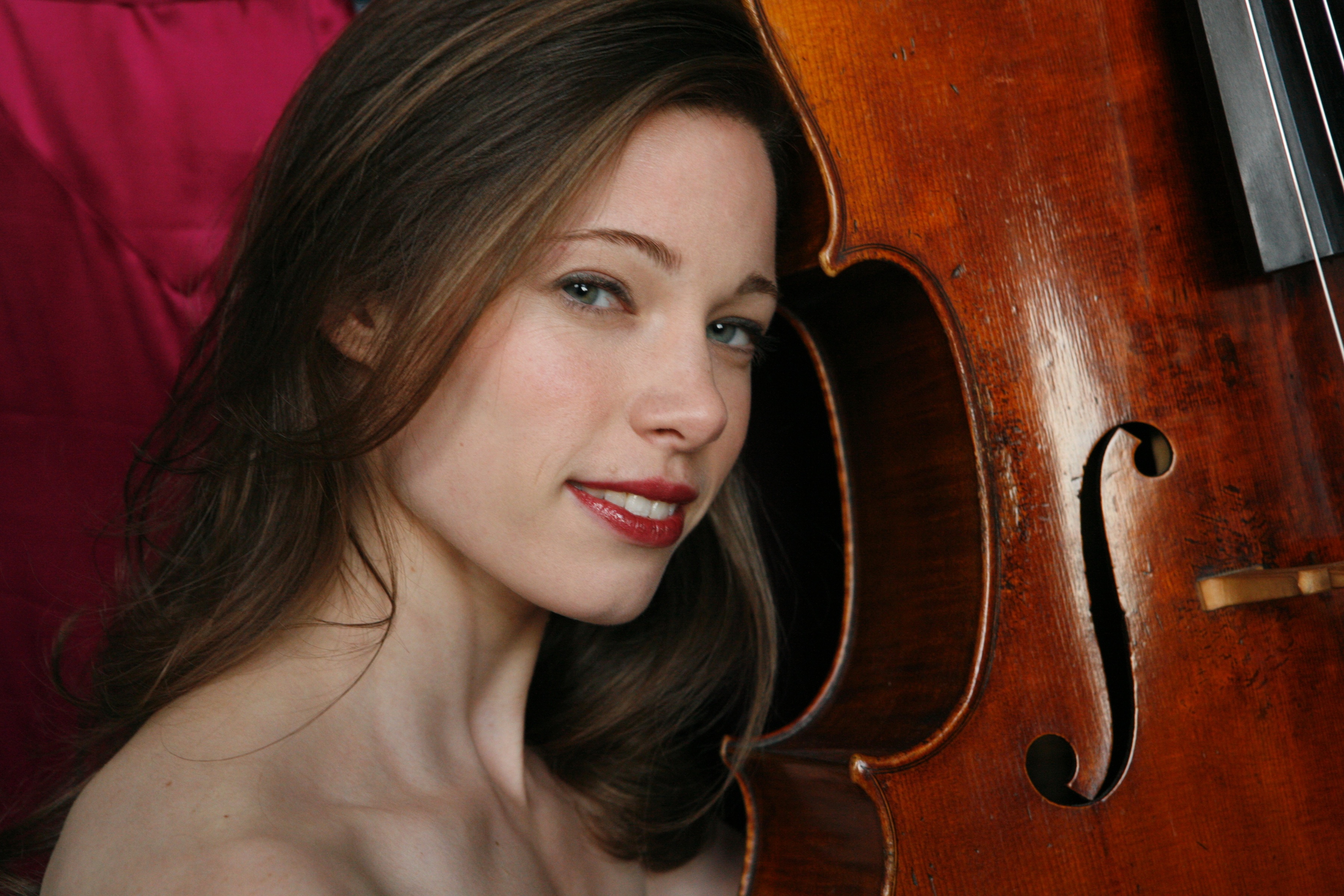 Julia Bruskin
Cello
Since her concerto debut with the Boston Symphony Orchestra at age 17, cellist Julia Bruskin has established herself as one of the premier cellists of her generation. She performed Cello Concerto by Samuel Barber with conductor Jahja Ling at David Geffen Hall and has also been a soloist with the Nashville Symphony, Utah Symphony, Virginia Symphony Orchestra, and Pacific Symphony, among others. Her recent CD of music by Ludwig van Beethoven, Johannes Brahms, and Ernő Dohnányi was praised by Fanfare Magazine for its "exquisite beauty of sound and expression."
A founding member of the critically acclaimed Claremont Trio, Ms. Bruskin won first prize in the 2001 Young Concert Artists International Auditions and was awarded the inaugural Kalichstein-Laredo-Robinson International Trio Award. The trio tours extensively, including concerts at the Library of Congress, Carnegie Hall, and the Isabella Stewart Gardner Museum. Bridge Records released the Claremont Trio's recording of Beethoven's Triple Concerto with the San Francisco Ballet Orchestra and Beethoven's Piano Trio in E-flat major, Op. 1, No. 1 to rave reviews.
Ms. Bruskin has performed with artists including Robert McDonald, Miriam Fried, David Shifrin, Robert McDuffie, Orli Shaham, and Anthony McGill. She performs frequent solo recitals with her husband, Aaron Wunsch, including both national and international tours. The two are in their seventh season as joint artistic directors of the Skaneateles Festival in New York's Finger Lakes region, presenting artists such as Gil Shaham, Hilary Hahn, and the Dover Quartet, Miró Quartet, and Catalyst Quartet.
A frequent guest at summer music festivals, Ms. Bruskin has performed at La Jolla Music Society SummerFest, Chamber Music Northwest, Mostly Mozart Festival, Caramoor Summer Music Festival, Saratoga Performing Arts Center, Bard Music Festival, and Norfolk, and has toured with the Musicians from Ravinia. Ms. Bruskin has taught at the Juilliard Pre-College and given masterclasses at the Eastman School of Music, the Peabody Institute, the Purchase College Conservatory of Music, the Boston Conservatory at Berklee, Duke University, and Middlebury College.
Born in Boston, Massachusetts, Ms. Bruskin began cello lessons at age four. Her teachers have included Timothy Eddy, Joel Krosnick, Andrés Díaz, Norman Fischer, and Nancy Hair. She completed the five-year double-degree program at The Juilliard School and Columbia University.
Ms. Bruskin has been a member of the Metropolitan Opera Orchestra since 2014, where she also helps curate the orchestra's chamber music series at Weill Recital Hall and serves on the orchestra's Artistic Advisory Committee.
|
Please upgrade

Internet Explorer
|
or try one of these other browsers.
Browsers are free and easy to install.
|
||||
| Upgrade Internet Explorer | What's a browser? Opt out |